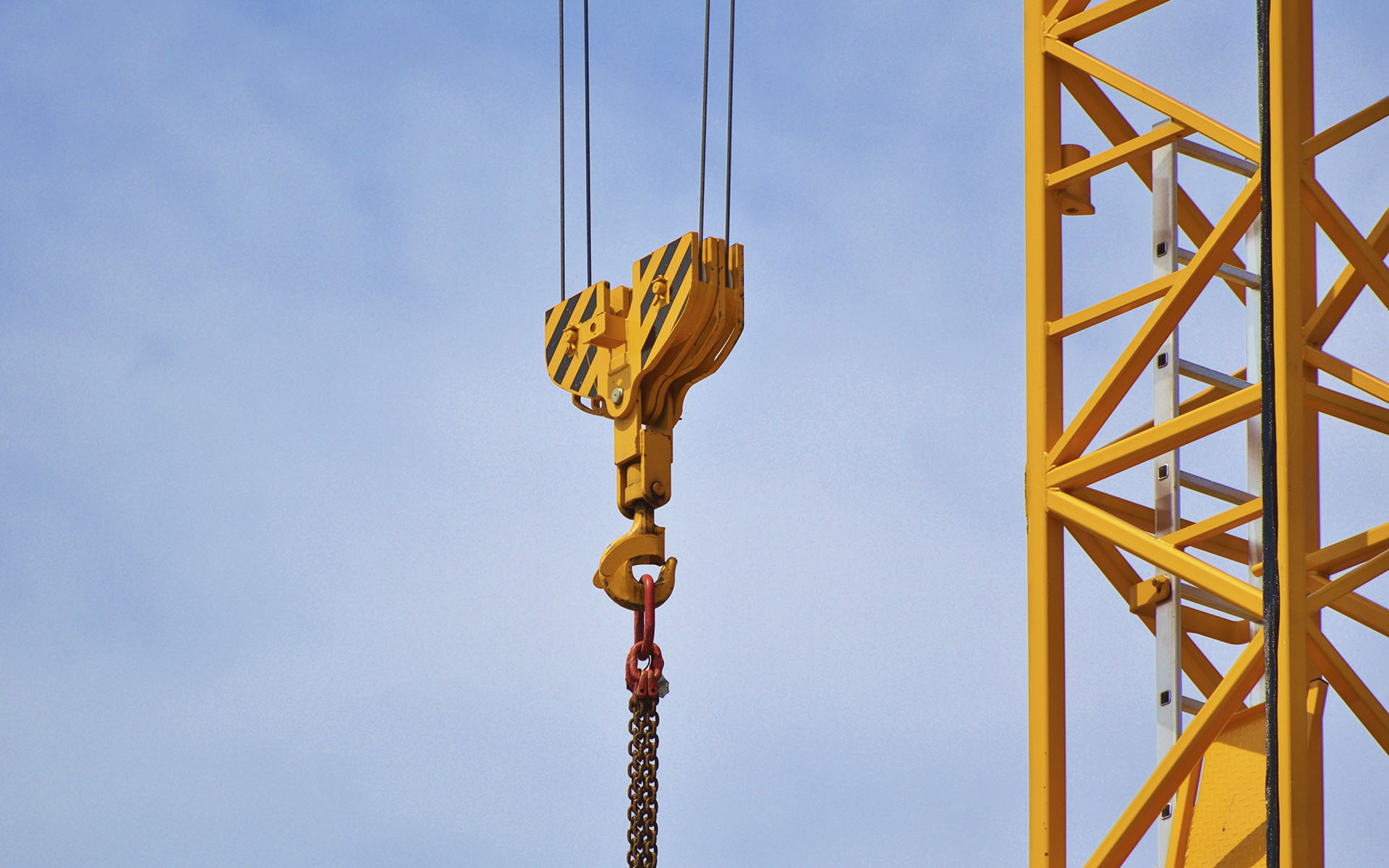
The lifting appliance is what lifts: the overhead crane, the jib crane, the hoist. The lifting accessory is what sits between the hook and the load: the sling, the beam, the vacuum lifter, the shackle. The difference is not linguistic — it decides who has to hold which documentation, what has to be inspected, and what may be discarded on the spot. Confuse them and the requirements land wrongly in both directions: an overhead crane is held to accessory rules, and a beam welded in-house is held to none at all.
An accessory you made yourself is a product you manufactured
A lifting beam welded up in your own workshop for a single lift is still a lifting accessory. That means risk assessment, strength evidence, marking with the working load limit, instructions and a declaration of conformity — exactly as for something you bought. It is the most common gap on an industrial floor, and it only shows when something breaks.
The product side: placing the equipment on the market
- The line between a lifting appliance and a lifting accessory, and which requirements follow each.
- The CE process through to declaration of conformity and marking — in the order the steps are actually done.
- Technical file and risk analysis for lifting equipment: what belongs in it and who has to be able to produce it.
- What changes with the Machinery Regulation compared with the Machinery Directive, for anyone who designs or buys lifting equipment.
- Accessories made in-house and modified appliances, where the manufacturer role lands on you without anyone deciding it.
The user side: lifting with it
- Lift planning: what has to be settled before the load leaves the ground, and who settles it.
- Choosing accessories for the load, the sling angles, sharp edges and the environment the lift happens in — the angle is what gets underestimated most.
- Checks before use and discard criteria: what to look for, and where the line is for taking something out of service.
- Inspection, maintenance and record keeping, and what the authorities ask for when they visit.
- How responsibility divides between whoever owns the equipment, whoever plans the lift and whoever carries it out.
Questions about lifting
- Does a lifting accessory have to be CE marked?
- Yes. Lifting accessories placed on the market have to be CE marked and meet the product requirements. That applies as much to an accessory you made yourself for your own use as to one you bought from a supplier — the fact that it never leaves your plant does not change it.
- We hire the crane in. What is our responsibility then?
- The hire company answers for the appliance being in the prescribed condition and inspected. You answer for the lift: that it is planned, that the accessories suit the load, that the operator has what they need, and that the check before use is done. Responsibility for the lift never transfers with the hire agreement.
- Who should take the course?
- Anyone who designs, buys or is responsible for lifting equipment, and anyone who plans lifts: machine designers and project engineers, purchasers, product owners, site owners, supervisors and managers with work environment responsibility.
- Does this course replace a practical operator's licence?
- No. It is about the requirements on the equipment and about how lifts are planned, checked and followed up — not about manoeuvring an overhead crane. The practical operator's certificate is a separate thing and is taken elsewhere.
- How often do lifting accessories have to be inspected?
- A check before use is done every time, by whoever is about to use the accessory, and the recurring statutory inspection happens at the interval that applies to the equipment. The course covers what each check involves and how it is recorded so it can be shown afterwards.
Training in lifting appliances and accessories
An online course at your own pace, for the people who CE mark the equipment and the people who lift with it.
See the courses